
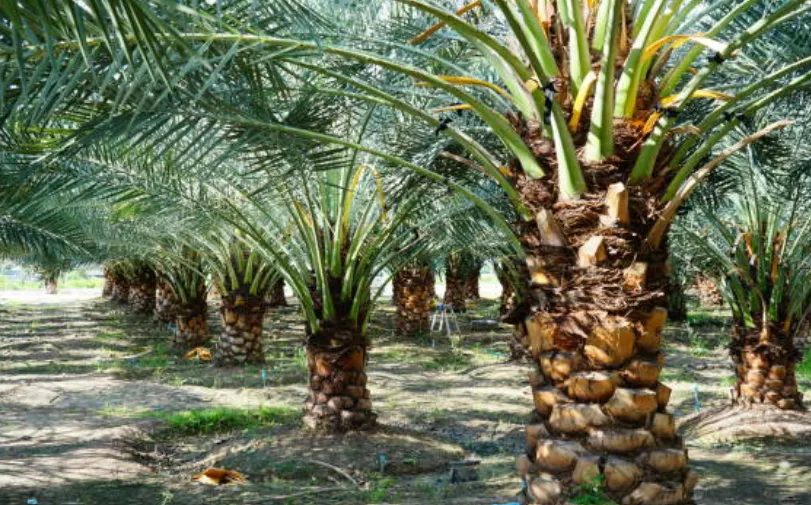
Why palm maintenance in Perth protects strata and commercial sites
On a strata or commercial property, a falling frond or seed pod lands on residents, visitors, cars and common areas. Scheduled maintenance keeps grounds looking cared for and reduces the likelihood of unexpected hazards, because palm care is planned rather than left until something drops.
Planned maintenance also makes budgeting simpler. A set schedule and a known scope replace a string of one-off call-outs.
Who we work with
- Strata properties and body corporates.
- Apartment complexes and townhouse developments.
- Real estate agencies and property managers looking after rental properties.
- Commercial sites, offices, retail centres and business parks with palms across shared grounds.
- Developers and landscapers removing or relocating mature palms during redevelopment.
What is included
- Scheduled trimming of dead fronds, seed pods and flower stalks, timed to each species.
- Health checks for disease, pests and structural decay. See palm health assessments.
- Removal when required for dead, diseased or unsuitable palms. See palm tree removal.
- Stump grinding and root barriers where palms sit close to paths, car parks and buildings.
- Full clean-up after every visit, with green waste taken to approved Perth facilities. See what our clean-up includes.
How maintenance contracts work
- Site assessment: every palm on the property is assessed as part of one project, covering species, height, condition and access.
- Schedule: palms are grouped by species and need, then set on service intervals. Cocos palms are typically every 6 to 12 months, Date palms annually and Canary Island palms every 12 to 18 months.
- Written scope and quote: the committee or manager receives a clear written scope and price.
- Scheduled visits: the crew attends at the agreed intervals, with safety set-up for occupied sites.
- Reporting issues: palms showing decline or damage are flagged so decisions can be made before they become hazards.
Working safely on occupied sites
Work areas are set up with barriers or signage, loose items are cleared from the drop zone, and nearby garden beds, paving and structures are protected. The crew wears appropriate personal protective equipment throughout, and fronds and trunk sections are lowered with ropes or rigging rather than dropped.
Care around buildings, gardens and shared grounds
On a shared site, the palm is rarely the only thing that matters. Roofs, balconies, pools, fences, car parks and established garden beds often sit directly beneath it. Before any cut, the crew works out the drop zone and the weight of each section. In tight courtyards and side paths, palms are taken down in smaller sections and lowered by hand or rope. Where there is room, a crane lowers sections without dropping debris onto gardens or structures. Rigging is planned around overhead power lines.
The same care continues after the palm is down. Stump grinding takes the stump 20 to 30cm below ground, so the spot can be turfed, paved or replanted. Where palm roots are lifting paving or getting close to foundations, pools or pipes, root barriers installed 60 to 100cm deep steer them away. Every visit ends with a full clean-up and raking of the work area, and a walkthrough with the committee or manager to confirm the work matches the agreed scope.
What affects the cost
- Number of palms and how they are spread across the site.
- Species and heights, which set the trimming frequency and equipment.
- Access, including car parks, courtyards and tight garden beds.
- Service frequency chosen for the contract.
- Any removals, stump grinding or root barriers added to the scope.
Next step
Call (08) 7813 3802 or email info@perthpalmtree.com.au with the site address and a rough palm count. We will arrange a site assessment and a written maintenance proposal.
Want to know what working with us looks like before you call? See how we keep committees and residents informed at every step.
For all your palm needs, visit our home page to browse palm tree removal perth and related services.